
A crooked picture row has a way of announcing itself every time you walk past. A small laser can make those everyday marks easier, but only if you know what it actually does. Some tools settle themselves to level. Others project a line after you align a bubble vial by hand. Searching for the best laser level under 50 calls for a clear distinction between automatic cross-line tools and manually positioned wall references.
That difference matters more than a crowded accessory photo. A rotating bracket is not a full-circle projected beam, and a magnetic fastener finder is not an electronic wall scanner. The useful choice is the one that puts the reference you need on the surface where you are working.
These nine picks cover automatic crosses, compact tripod packages, and simpler manual wall tools. The reviews explain which setup suits repeatable references and which serves a smaller decorating task. Start with the line and support needed for your next project, rather than expecting every tool to perform the same way.
Quick Answer
- Best Overall: Bosch GLL50-20. Red horizontal and vertical cross lines.
- Best with a Tripod: Motovera Green Cross-Line Tripod Kit. Green horizontal and vertical cross lines.
- Best Rechargeable Pocket Option: Fanttik D2. Green horizontal and vertical cross lines.
Compare the Nine Picks
| Product | Best fit | Reference layout | Power and positioning |
|---|---|---|---|
| Bosch GLL50-20 | Best Overall | Red horizontal and vertical cross lines | Two AA cells; optional specified Bosch rechargeable pack; Integrated magnetic mount; 1/4-20 thread |
| Motovera Green Cross-Line Tripod Kit | Best with a Tripod | Green horizontal and vertical cross lines | AA battery supply; Included tripod and magnetic base |
| Fanttik D2 | Best Rechargeable Pocket Option | Green horizontal and vertical cross lines | Integrated 2200mAh rechargeable battery; USB-C; Magnetic rotating bracket |
| RockSeed Red Cross-Line Laser | Best Simple Red Cross | Red horizontal and vertical cross lines | Battery-powered selected package; Rotatable compact housing |
| PREXISO Dual-Module Tripod Kit | Best Compact Green Tripod Alternative | Green horizontal and vertical cross lines | Two AA batteries; Included 31½-inch tripod |
| BLACK+DECKER BDL220S | Best Manual Picture-Hanging Tool | Single surface line; manual alignment | Two AA batteries; Rotating wall attachment |
| PREXISO PLV2 Multi Surface Laser | Best Manual Perpendicular Guides | Perpendicular surface references; manual vials | Two AA batteries; Pin or adhesive wall base |
| AikTryee Multipurpose Laser Level Kit | Best Integrated Tape and Vials | Selectable surface lines; manual vials | Battery-powered combination tool; Included small triangle bracket |
| PREXISO Magnetic Nail Detector and Laser | Best for Locating Wall Fasteners | Manually aligned red line | Magnetic detection needs no battery; laser uses its own power supply; Wall pins and built-in bubble vials |
1. Bosch GLL50-20 (Best Overall)
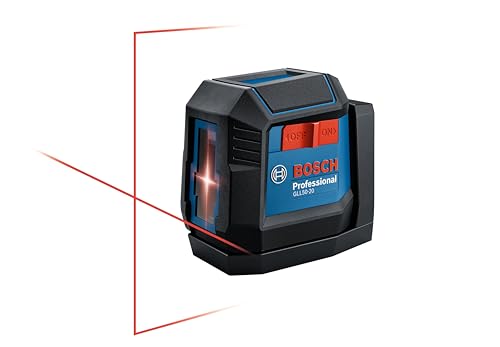
The GLL50-20 makes sense when you want the tool to establish level instead of balancing a vial while holding a pencil. Its red cross suits local shelf, frame, and wall-height marks. AA operation also works well for a tool that spends time in a drawer between projects.
The GLL50-20 projects a red cross and uses Bosch’s self-leveling Smart Pendulum System. It accepts two AA batteries or the specified Bosch 3.7V rechargeable pack, which is separate. Its rubber-overmolded housing and integrated magnetic mount give it a practical setup for local indoor marks.
Pros
- Automatic leveling with an out-of-level indication.
- AA operation.
- Optional specified rechargeable power.
- Magnetic positioning mount.
- Locking pendulum for transport.
Cons
- No continuous horizontal plane.
- Rechargeable pack is separate.
Choose it for automatic local references. Arrange another support when there is no suitable steel for the magnetic mount.
To buy this product, click here.
2. Motovera Green Cross-Line Tripod Kit (Best with a Tripod)

A tripod solves a very ordinary problem: there is nowhere convenient to set the laser. This Motovera package puts the green cross and a stand together. The four brightness settings offer control over the visible reference without changing the basic two-line geometry.
The selected Motovera kit projects green cross lines with four brightness settings. Its package identifies a tripod, magnetic mounting base, batteries, and carry bag. The automatic and manual modes serve level references and deliberate angled layouts respectively.
Pros
- Tripod included in the selected package.
- Four brightness settings.
- Magnetic mounting base.
- Automatic and manual modes.
- Batteries and carry bag supplied.
Cons
- Not a three-plane or rotary grading laser.
- Check the supplied stand against the intended working height.
Check the stand against your marking height. A compact included tripod may still need a taller replacement for upper wall work.
To buy this product, click here.
3. Fanttik D2 (Best Rechargeable Pocket Option)

The D2 is appealing for quick room-to-room jobs where a small body and USB-C charging are useful. Picture moving from a hallway frame row to a shelf bracket in the office. The magnetic bracket helps when a suitable metal surface is already close to the mark.
The D2 is a pocket-format green cross-line laser with automatic and manual modes. The selected package includes a magnetic bracket, USB-C cable, and drawstring pouch. An out-of-level flashing signal identifies when the automatic leveling range is exceeded; the bracket rotates for positioning rather than projecting a continuous plane.
Pros
- Pocket-format housing.
- Green cross-line reference.
- USB-C charging.
- Magnetic bracket included.
- Out-of-level indication.
Cons
- Battery is integrated.
- Rotating the bracket does not provide a projected 360° plane.
It projects a cross rather than a continuous plane. Start the session with a charged battery and a sensible mounting position.
To buy this product, click here.
4. RockSeed Red Cross-Line Laser (Best Simple Red Cross)

The RockSeed offers the core automatic cross-line arrangement without turning a small wall job into a complicated setup. The important control is the pendulum mode: unlocked for a gravity-based reference, locked when deliberately drawing an angled guide.
This selected RockSeed version projects red horizontal and vertical references. It offers automatic leveling and a locked manual mode for deliberate angled lines. The package identifies batteries and a carrying pouch; a suitable support should be arranged for the intended working height.
Pros
- Red cross-line projection.
- Self-leveling operation.
- Manual angled-reference mode.
- Batteries included in the selected package.
- Carrying pouch included.
Cons
- Not a continuous-plane laser.
- Do not assume an elevated stand is included.
Use it for local indoor marks. Confirm the reference before making permanent holes, especially after moving the support.
To buy this product, click here.
5. PREXISO Dual-Module Tripod Kit (Best Compact Green Tripod Alternative)

PREXISO pairs green cross lines with a short tripod and replaceable AA power. That combination suits a low reference or a setup on a stable elevated surface. Separate reference modules are useful when you want the projection suited to the current task.
The selected PREXISO kit uses separate modules for its green cross-line references. Its package includes a compact tripod and two AA batteries. The supplied stand reaches approximately 31½ inches, so a wall-height reference may need another suitable support.
Pros
- Green cross lines.
- Automatic leveling.
- Separate reference modules.
- Compact tripod included.
- AA batteries included.
Cons
- Bundled tripod is short for many wall marks.
- Not a full-room horizontal plane.
The supplied tripod is approximately 31½ inches tall. Plan the support rather than expecting that stand to reach every shelf.
To buy this product, click here.
6. BLACK+DECKER BDL220S (Best Manual Picture-Hanging Tool)

The BDL220S is a different kind of tool from the automatic models above. Its vials guide manual alignment, and its wall attachment helps hold the reference beside a decorating job. The rotating attachment changes orientation; it does not cast a horizontal plane around the room.
Backlit horizontal and vertical vials provide the alignment reference. The operating manual instructs the user to rotate the device to center the bubble, despite self-leveling language in some listings. The wall attachment uses a drywall pin, and its rotation does not create a 360° projected plane.
Pros
- Rotating attachment permits angled wall references.
- Angle-reference ring assists deliberate layouts.
- Backlit vials aid manual setup.
- Wall attachment and AA batteries included.
- Wall-mounted working position keeps the tool near the marks.
Cons
- Manual bubble alignment is required.
- Drywall-pin mounting makes a hole.
Choose it for deliberate, nearby wall marking. Be comfortable with the attachment method before placing it against a finished surface.
To buy this product, click here.
7. PREXISO PLV2 Multi Surface Laser (Best Manual Perpendicular Guides)
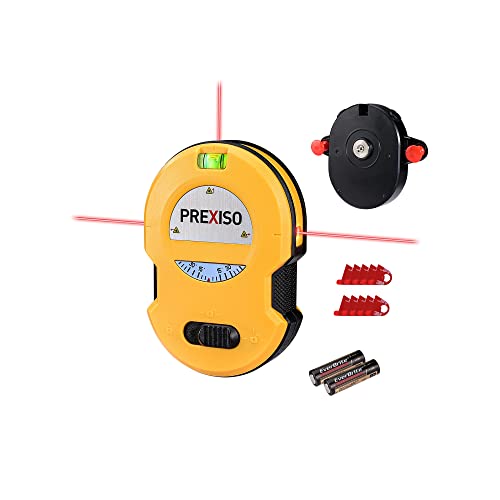
A pair of perpendicular surface references can be handy when a frame row needs both a baseline and an upright guide. The PREXISO PLV2 uses manual positioning, illuminated vials, and wall attachment options. It keeps the working reference close to the surface.
The PLV2 uses surface-projected perpendicular references and bubble-vial alignment. Its illuminated angle dial provides a reference for deliberately angled layouts. The mounting base offers pin and adhesive-strip options; surface suitability still needs checking.
Pros
- Perpendicular surface-layout references.
- Illuminated vials aid manual alignment.
- Angle dial for deliberate direction changes.
- Pin and adhesive mounting options.
- Compact wall-mounted arrangement.
Cons
- Does not automatically compensate for tilt.
- Adhesive and pin mounting have surface-specific limits.
Align the vials carefully. This is a surface-layout tool, so do not expect automatic compensation when the body is tilted.
To buy this product, click here.
8. AikTryee Multipurpose Laser Level Kit (Best Integrated Tape and Vials)
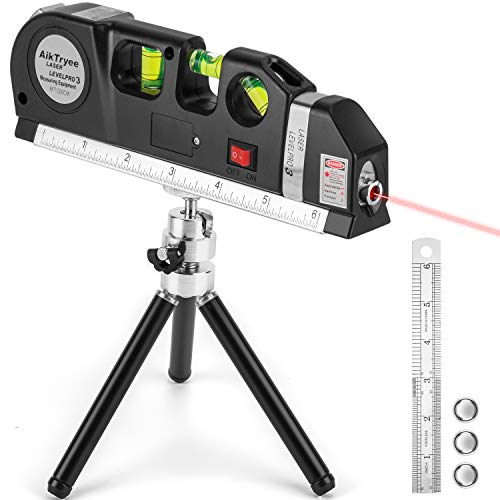
The AikTryee combines a short tape, vials, and projected guides in one handheld format. That can suit a small frame arrangement where measuring the spacing and carrying a nearby line are the main tasks. The little bracket is a positioning aid rather than a full-height stand.
The tool combines selectable horizontal, vertical, and cross-line modes with bubble vials and an eight-foot tape. The listed variant includes a small triangle bracket and a 1/4-inch mounting hole. It should be treated as a manually aligned combination tool, not a documented pendulum self-leveling laser.
Pros
- Selectable surface-line modes.
- Built-in tape for short measurements.
- Horizontal, vertical, and 45° bubble references.
- Small supporting bracket included.
- Combines several basic marking functions.
Cons
- Manual alignment rather than verified automatic compensation.
- Small bracket is not a full-height positioning stand.
Use it for modest decorating layouts. Keep the tape measurement and manual leveling step separate so neither is assumed from the other.
To buy this product, click here.
9. PREXISO Magnetic Nail Detector and Laser (Best for Locating Wall Fasteners)

This PREXISO adds a magnetic fastener locator to a manually aligned laser. That is useful when you are following nails or screws in drywall and then carrying an upright reference nearby. The magnetic function has a specific job, and it does not identify every hidden object.
This tool combines a magnetic nail-and-screw locator with a red alignment line. Horizontal and vertical bubble vials support manual orientation, and two pins help hold it against suitable rough walls. The magnetic feature locates metal fasteners; it is not an electronic scanner for pipes, wiring, or hidden stud edges.
Pros
- Magnetic fastener detection.
- Red line for local alignment.
- Horizontal and vertical vials.
- Wall pins supplied.
- Compact rubber-covered housing.
Cons
- Manual vial alignment rather than automatic leveling.
- Pins are unsuitable for smooth tile and can mark walls.
Choose it for fastener location and local alignment. It cannot replace the appropriate checks for concealed wiring or pipes.
To buy this product, click here.
Choosing the Best Laser Level Under 50
Decide Whether You Need Automatic Leveling
If you will repeat marks across a wall, automatic leveling can remove a fiddly setup step. A vial-guided tool can still serve a small decorating job, but the line follows the body unless you align it correctly. Look for the operating method before counting the accessories. The steps for setting up a small laser for basic marking explain when the user supplies the alignment and when the instrument provides automatic compensation.
Match the Projection to the Surface
A cross gives a local horizontal and vertical reference. A surface-layout guide is intended to run along a wall or floor. A continuous plane carries a reference farther around a room, but none of these compact cross-line picks becomes one merely because its bracket rotates.
Plan the Support at the Actual Height
A stand that stops below the work can still be useful on a solid platform, but an improvised stack of boxes can shift. Check the working height, mounting thread, and available surface. The most useful accessory is the one that holds the reference steadily beside the mark.
Choose a Power Routine You Will Maintain
AA cells are straightforward to replace before an occasional project. USB-C charging is convenient when you already keep a charging routine. An integrated rechargeable battery needs time to refill, while an optional battery pack must match the exact tool rather than a familiar-looking connector.
Check Wall Attachments Before Decorating
Pins can leave small holes, and adhesive performance varies with paint and texture. A magnetic mount needs suitable steel beneath or beside the work. Test the support method in an appropriate place and let the tool settle before marking the line center. For decorating, marking wall fittings from the actual hardware matters as much as making the visible line straight.
Keep the Job Within the Tool’s Role
A little indoor cross is not a substitute for a rotary receiver system across a sunny yard. Start with picture rows, brackets, and local references. Check the model’s accuracy at a stated distance and repeat its field-check procedure when the work demands a closer tolerance.
FAQ
Are All These Tools Self-Leveling?
No. Bosch, Motovera, Fanttik, RockSeed, and the PREXISO tripod kit provide automatic leveling. The vial-guided wall tools require manual alignment, which is why their different role is explained in the reviews.
Does a Rotating Bracket Mean a 360° Laser?
No. A bracket can rotate a short projection toward another wall. A true horizontal 360° plane projects around the instrument without that repositioning step.
Can I Use a Laser to Find Studs?
Only a tool with a relevant detection function can help locate something behind a wall. The magnetic PREXISO identifies metal fasteners, not stud edges or all concealed services.
Is Green Always the Better Choice?
Green can be easier to see under suitable indoor conditions, but automatic leveling, support stability, and the correct reference geometry still matter. Beam color alone does not establish accuracy.
Can a Short Tripod Work for Shelves?
Sometimes, if a stable support surface puts it at the required height. Check the arrangement before starting rather than assuming the included stand reaches the shelf line from the floor.
Why Is My Automatic Laser Flashing?
It may be outside its compensation range or indicating another operating condition. Check the exact manual, support angle, power, and pendulum mode before using the line as a level reference.
Final Verdict
The Bosch GLL50-20 is our overall choice for an uncomplicated automatic wall reference. Choose the Motovera kit when the supplied stand solves your setup, or the Fanttik D2 when rechargeable pocket portability is the stronger fit.
The manual tools have a useful place for small decorating jobs, provided you align their vials and accept the attachment method. Pick the reference and support you will actually use, then make the first mark only after the setup has settled.
