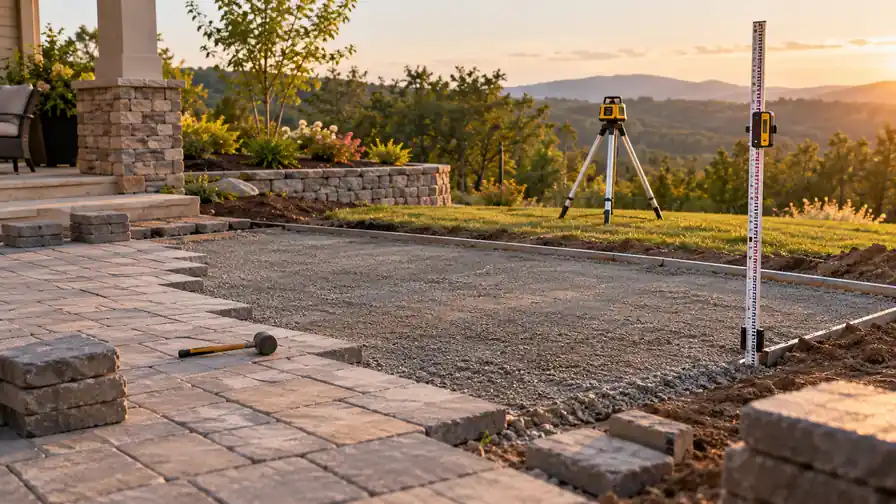
A patio can look smooth and still carry water in the wrong direction. Before the finished surface hides the preparation, its planned elevations need to be related clearly to thresholds, edges, and the intended drainage arrangement. A shared laser datum makes those relationships measurable. The best laser level for patios is useful when it lets you check the designed heights and fall against a consistent reference across the work.
The useful reference is not necessarily the finished patio plane itself. A horizontal laser can support calculated offsets, while a documented slope mode offers another method. The design determines the required fall and transitions; the instrument transfers or compares the chosen heights.
These nine options emphasize receiver-based outdoor readings and clear slope distinctions. Choose around the measurement method, field accessories, and stations the project needs checked. The best setup keeps the benchmark accessible through preparation, edge work, and later verification.
Quick Answer
- Best Overall: Bosch GRL2000-40HVK Kit. Horizontal/vertical rotary; manual dual slope.
- Best Focused Outdoor Datum: Topcon RL-H5A Receiver Kit. Horizontal rotary reference.
- Best Digital Offset Feedback: Spectra Precision LL300N with HL450. Horizontal rotary reference.
Comparison Table
| Product | Best fit | Reference layout | Power and positioning |
|---|---|---|---|
| Bosch GRL2000-40HVK Kit | Best Overall | Horizontal/vertical rotary; manual dual slope | Battery-powered selected kit; Receiver, tripod, rod, remote and wall mount |
| Topcon RL-H5A Receiver Kit | Best Focused Outdoor Datum | Horizontal rotary reference | Specified D-cell or rechargeable configuration; Receiver holder; tripod separate |
| Spectra Precision LL300N with HL450 | Best Digital Offset Feedback | Horizontal rotary reference | Four D-cell batteries; HL450 receiver and clamp; tripod separate |
| Johnson JRT300-RDHV-S | Best Complete Manual Dual-Slope Alternative | Horizontal/vertical rotary with manual dual slope | Two supplied rechargeable batteries; alkaline-holder option; Receiver, remote, tripod and thirteen-foot rod |
| Milwaukee M18 3704-21T System | Best M18 Dual-Slope Field Setup | Red exterior dual-slope rotary reference | M18 rechargeable platform; Receiver, remote, grade rod and tripod |
| Spectra Precision LL100N-2 Kit | Best Included Inch-Based Package | Horizontal rotary reference | Two D-cell batteries; Tripod, HR320 receiver and inch-graduated rod |
| Johnson Level 99-027K System | Best Complete Horizontal-Reference System | Horizontal rotary; manual vertical alignment | Four C-cell batteries; Detector, tripod and 13-foot rod |
| Bosch GRL900-20HVK Kit | Best Complete Mixed-Project Kit | Horizontal and vertical rotary operation | Selected alkaline-battery kit; LR10 receiver, BT160 tripod and grade rod |
| DEWALT DW074KD | Best with Existing Tripod and Rod | Horizontal rotary; manually aligned vertical mode | Two D-cell batteries; DW0742 detector, clamp and wall mount |
1. Bosch GRL2000-40HVK Kit (Best Overall)

A patio’s planned fall can be represented through offsets or a documented inclined-reference method. The GRL2000-40HVK provides manual dual-axis adjustment with complete field equipment. Its value is supporting that chosen workflow rather than treating any tilted projection as the required finished surface.
Manual dual-slope adjustment allows the reference angle to be changed on both axes. Electronic self-leveling and a disturbance monitor support repeatable site setup. The linked complete package includes a receiver, tripod, grade rod, remote, wall mount, and carrying case. The important decision is which method represents the intended patio elevations most clearly. Manual adjustment does not mean numerical percentage entry, and the plane needs checking against known points. Keep thresholds, finished surface, and preparation layers distinguished so a convenient reading is not attached to the wrong component.
Pros
- Manual slope adjustment on two axes.
- Horizontal and vertical operation.
- Electronic self-leveling.
- Disturbance monitor.
- Receiver, tripod, rod, and remote included.
Cons
- Manual slope is different from automatic numeric grade entry.
- Complete kit takes more storage space than a line laser.
The GRL2000-40HVK is most appealing to a buyer who needs complete field equipment and has a defined use for manual dual-axis slope. That makes it versatile for a planned patio measurement method, rather than simply a rotary tool with extra buttons. A horizontal datum with offsets may still be the more understandable approach for several related surface heights. With the method settled first, the Bosch gives the operator the receiver and supports to establish and check the intended reference rather than merely tilt it.
To buy this product, click here.
2. Topcon RL-H5A Receiver Kit (Best Focused Outdoor Datum)

One horizontal datum can relate patio stations intended to finish at different heights. The RL-H5A and receiver support that focused outdoor measurement. Planned target readings can then carry the fall without requiring the transmitter’s reference to change at every station.
Topcon specifies an 800-meter working diameter and ±10 arc-second horizontal accuracy for the RL-H5A. Electronic horizontal self-leveling and IP66 protection suit outdoor elevation work with a receiver. The selected listing identifies an LS-80L receiver and holder; verify the exact battery and support-equipment bundle. The reference should connect the patio to its actual design, including the intended relationship to surrounding surfaces. A level beam does not mean the finished patio should be level everywhere. Record the benchmark and offsets, and keep the receiver clamp and contact method consistent as the work moves between stations.
Pros
- Horizontal rotary reference for elevation checks.
- Receiver and holder identified in the selected kit.
- Electronic self-leveling.
- Documented IP66 protection.
- Manual slope capability described by the manufacturer.
Cons
- Not a three-plane interior wall-layout tool.
- Tripod, rod, and exact battery bundle need separate confirmation.
The RL-H5A is a strong fit for a patio checked from one horizontal datum, with the planned fall represented through different target readings. Its receiver package supports that focused outdoor role. A complete system is more relevant when no suitable tripod and rod are available, and a repeated numerical-grade task calls for another instrument class. For the level-reference method, the Topcon keeps the purchase centered on readable, comparable elevation transfer, with the surface plan determining what each reading should be.
To buy this product, click here.
3. Spectra Precision LL300N with HL450 (Best Digital Offset Feedback)

Repeated preparation checks can benefit from seeing the remaining offset numerically. The LL300N’s HL450 provides that feedback, while the rotary instrument establishes the reference. It is useful for a planned set of station readings that must remain comparable through the preparation stages.
The LL300N combines automatic horizontal leveling with a protective rotor housing and IP66 enclosure. The selected alkaline package includes an HL450 receiver and clamp but does not include a tripod. Its single-axis slope workflow requires the optional RC601 remote, with leveling retained on the other axis. The number shown is the offset within the receiver window, not the finished surface elevation by itself. Connect it to the rod reading and planned component offset. If the optional single-axis slope method is wanted, include the specified RC601 remote in the plan rather than assuming that capability comes from the supplied receiver.
Pros
- Automatic horizontal leveling.
- IP66 enclosure.
- Protective rotor housing.
- HL450 receiver included.
- Optional single-axis slope workflow.
Cons
- Tripod and rod are separate in this package.
- RC601 remote is separate.
The LL300N is useful for someone who wants a numerical indication of the remaining offset while checking defined patio stations. Its HL450 can make that part of the reading routine clear, but the planned surface and layer offset must still supply the target. Complete kits solve a different equipment problem. With a suitable tripod and rod arranged, the Spectra combination makes sense for a deliberate preparation-and-checking sequence, with the optional remote considered separately if its single-axis slope method will be used.
To buy this product, click here.
4. Johnson JRT300-RDHV-S (Best Complete Manual Dual-Slope Alternative)

A complete manual-slope system is useful when known references will establish the incline. The JRT300-RDHV-S supplies the receiver, remote, tripod, and rod for that arrangement. Its two rechargeable batteries add a practical preparation option for a longer measuring session.
The JRT300-RDHV-S supports adjustment of the reference on its marked X and Y slope axes. The S system includes the receiver and clamp, remote, tripod, thirteen-foot rod, two rechargeable batteries, and hard case. Its manual slope controls are different from entering a numerical percentage; the operating guide also distinguishes manual-mode accuracy from automatic leveling specifications. The manual slope mode needs independent reference checks, and its automatic leveling specification should not be treated as a guarantee for an operator-established incline. Align the marked axes with the intended directions and verify the endpoint relationship. The remote helps send commands; it does not decide the drainage geometry.
Pros
- Manual slope on two axes.
- Receiver and remote included.
- Tripod and rod supplied.
- Two rechargeable batteries.
- Horizontal and vertical operating positions.
Cons
- No supported numeric percentage-entry claim.
- Manual slope requires independent reference checks.
The Johnson JRT300-RDHV-S suits a buyer comfortable establishing an inclined reference manually and wanting the field accessories included. Its receiver, remote, and supports make that a complete operating arrangement rather than a transmitter feature in isolation. The manual-mode accuracy distinction remains important, so known references must verify the plane. Someone who specifically needs numerical grade values should compare another model. For the endpoint-based method, the Johnson offers a clear purpose when the operator understands how the intended patio fall will be represented.
To buy this product, click here.
5. Milwaukee M18 3704-21T System (Best M18 Dual-Slope Field Setup)

Judging the grade away from the transmitter gives remote adjustment a defined purpose. The selected Milwaukee dual-slope system includes the corresponding field equipment. It is relevant when both the control method and the complete M18 reading arrangement fit the planned patio work.
The 3704 exterior dual-slope family supports slope adjustment through its controls and remote. The selected T-style package identifies a receiver, remote, grade rod, and tripod. Its published coverage is a diameter; slope setup still needs the documented axis orientation and a checked reference. The instrument axes and the planned fall must agree before the control change is useful. Establish the relevant reference points, then verify the resulting plane instead of relying on the fact that the remote accepted a command. The system’s large coverage figure describes a diameter, so use the correct one-sided distance when positioning the tripod.
Pros
- Dual-slope capability.
- Remote slope adjustment.
- Compatible receiver package.
- Tripod and rod in the selected system.
- M18 battery platform.
Cons
- More controls than a level-only reference needs.
- Large transport and setup footprint.
The selected Milwaukee system has its strongest case for an M18 user who needs a complete dual-slope field setup. Remote adjustment can be useful when the reference is judged at another station, but the axes must first match the intended fall. A simpler level-reference job may not need those controls. For a buyer who will use the full arrangement, the package brings together the necessary reading and support components, with preserved benchmarks making each adjustment verifiable rather than merely convenient.
To buy this product, click here.
6. Spectra Precision LL100N-2 Kit (Best Included Inch-Based Package)

An inch-based field package can fit the convention already used by the patio plan. The LL100N-2 supplies an inch-graduated rod, receiver, and tripod. A horizontal datum can then relate several stations without changing the reading system from one position to another.
The LL100N automatically establishes a horizontal reference and provides a height-change alert. This LL100N-2 package includes an HR320 receiver, rod clamp, tripod, inch-graduated rod, and system case. Manual slope operation requires the appropriate optional RC601 remote; it is not a numeric dial-in grade laser. Keep preparation-layer readings distinct from finished-surface readings. The required offsets can differ even at the same station. The optional remote needed for its documented slope workflow is separate, so choose the included package primarily around the field-reading arrangement that is actually supplied.
Pros
- Horizontal self-leveling.
- Height-change alert.
- HR320 receiver and clamp included.
- Tripod and inch-graduated rod included.
- System case organizes the selected package.
Cons
- Optional remote is needed for the documented slope workflow.
- Not a three-plane interior line laser.
The LL100N-2 is appealing when its inch-graduated rod matches the way the patio layout is recorded. That alignment between equipment and measurement convention can matter more than another unused operating mode. The supplied receiver and tripod give a new field setup a clear starting point. For a buyer working in feet and inches, the package is a purposeful horizontal-reference option, with the finished-surface and preparation offsets kept distinct rather than inferred from whichever mark is easiest to reach.
To buy this product, click here.
7. Johnson Level 99-027K System (Best Complete Horizontal-Reference System)
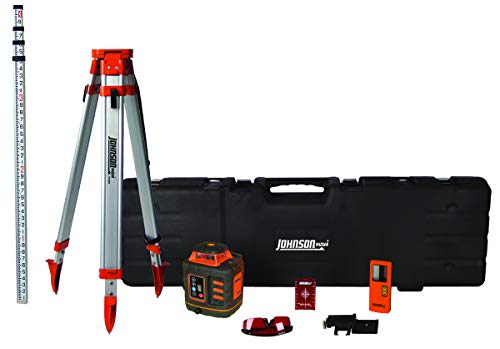
Changing target readings can represent a patio’s fall while the transmitter stays horizontal. The 99-027K supplies complete field equipment for that method. It gives a buyer a defined level-reference arrangement without adding slope controls that the chosen workflow does not require.
The 99-027K self-levels horizontally and supports manual vertical alignment with a split beam. The system includes a detector and clamp, tripod, dual-graduated grade rod, batteries, target, and hard case. Its IP66 housing and locking compensator support site use and transport; this model does not provide slope adjustment. This model does not have slope adjustment, so the measurement method should be chosen with that distinction clear. Use the correct face of the dual-graduated rod and keep station labels understandable. A consistent level reference can support a sloped finished surface when the intended offsets are calculated correctly.
Pros
- Detector, tripod, and rod included.
- Horizontal self-leveling.
- Dual rod graduations.
- IP66 enclosure.
- Locking compensator for transport.
Cons
- No slope-adjustment function.
- Vertical setup is manual.
The 99-027K is a good fit when the patio will be checked with a horizontal datum and calculated offsets. That method can represent the planned fall without a slope mode, making the complete Johnson equipment useful on its own terms. A buyer planning to tilt the reference should compare the GRL2000-40HVK or another supported alternative. For level-reference work, the system is most convincing when the correct rod face and recorded station targets keep the intended surface relationship clear throughout preparation.
To buy this product, click here.
8. Bosch GRL900-20HVK Kit (Best Complete Mixed-Project Kit)

A patio can be one of several tasks served by a complete rotary kit. The GRL900-20HVK supplies the receiver, tripod, and rod for outdoor elevation transfer, with other mounting and orientation options for related building work. The field setup has a clear role before those additional uses are considered.
The selected kit includes an LR10 receiver, tripod, grade rod, remote, wall mount, and case. Horizontal and vertical operation supports elevation transfer and interior alignment. Electronic leveling and a disturbance monitor help identify a changed setup; the linked package lists D-cell power for the transmitter. For the patio, keep the benchmark and the planned surface relationships clear. A horizontal datum with offsets can serve the checking method without numerical grade entry. The disturbance monitor helps identify a changed setup, but rechecking the known reference is still what reconnects later readings to the original plan.
Pros
- Horizontal and vertical operation.
- Electronic leveling.
- Disturbance monitor.
- Receiver, tripod, and rod included.
- Remote and wall mount supplied.
Cons
- Larger package than a compact wall laser.
- Do not assume numeric slope entry.
The GRL900-20HVK suits someone assembling field equipment for a patio and other building tasks. The receiver, tripod, and rod provide the elevation-transfer system, while the additional rotary roles have value only if those tasks are expected. Numerical grade entry is not part of that purchase rationale. For a buyer using a horizontal datum with planned offsets, the Bosch offers a coherent complete package, with the disturbance feedback and a benchmark check helping to keep later measurements related to the first setup.
To buy this product, click here.
9. DEWALT DW074KD (Best with Existing Tripod and Rod)

The detector package is a different buying decision when suitable field supports already exist. The DW074KD can supply the matched horizontal-reading components for that setup. Its rotary reference is useful for station comparisons, with the actual patio fall represented by the planned offsets.
Horizontal operation self-levels, while vertical setup uses manual alignment. The kit includes a DW0742 detector and clamp, wall mount, target, contractor bag, and batteries. A protective cage surrounds the rotary head; the selected package does not include a full-height tripod. The selected package leaves the tripod and rod separate, so check those connections before starting. A horizontal reading can represent a planned slope through calculated offsets, but the instrument does not supply the design fall. Its manual vertical alignment is another function, not a substitute for an established patio elevation method.
Pros
- Horizontal self-leveling.
- Included compatible detector and clamp.
- Vertical alignment option.
- Wall mount supplied.
- Protected rotor head and storage bag.
Cons
- Vertical leveling is manual.
- Tripod and rod are separate.
The DW074KD belongs on the shortlist when a suitable field support kit is already in hand. Its matching detector package can then fill the required horizontal measurement role without replacing the tripod and rod. Someone missing those components should weigh the complete systems instead. For a planned level-datum patio method, the DEWALT has a focused purpose, while the required fall and layer relationships come from the design and recorded offsets rather than an assumed slope feature on the instrument.
To buy this product, click here.
Choosing the Best Laser Level for Patios
Establish the Intended Surface Relationships
Thresholds, edges, outlets, and surrounding paving need a defined plan. The laser compares elevations; it does not decide the patio’s required fall or drainage destination. Begin with relating patio elevation checks to the drainage plan, including which layer and finished relationships the readings describe.
Choose a Level or Inclined Reference Method
A horizontal datum with offsets can represent a sloped surface. A supported slope mode offers another approach. Use a method that can be verified at known stations and keeps the axes understandable.
Distinguish Preparation and Finished Levels
Base-related checks and finished-surface checks may need different offsets. Label the station and component being measured so a correct reading is not applied to the wrong layer.
Use Consistent Receiver Technique
Keep the rod upright, the clamp secure, and the graduation system unchanged. A numeric detector offset is only one part of the elevation measurement.
Recheck the Datum as Work Proceeds
Material delivery, excavation, and preparation activity can shift the support or benchmark. Preserve a stable reference outside that work and return to it after interruptions or alerts. The routine for preserving the benchmark during outdoor work helps prevent later preparation checks from being compared against a reference that has moved.
FAQ
Should a Patio Be Completely Level?
The actual design determines the intended elevations and drainage relationships. Do not assume a level laser plane is the required finished surface.
Do I Need a Slope Laser?
Not necessarily. A horizontal datum can support calculated offsets. Slope controls serve another documented measurement method.
Does Manual Dual Slope Mean Numerical Entry?
No. Manual adjustment and numerical grade settings are different functions, with different setup expectations.
Can I Check Only the Edge Heights?
Use the stations required by the plan and checking method. Edge readings alone do not describe every intermediate surface position.
What If the Instrument Moves During Preparation?
Reconnect the setup to the preserved benchmark before continuing. Automatic leveling alone does not retain the original height.
Final Verdict
The GRL2000-40HVK is our overall choice for complete field equipment and a documented manual dual-slope option. The RL-H5A is more focused for horizontal-reference measurements, and the LL300N with HL450 adds useful numeric offset feedback. A patio can be checked with a level datum and changing readings, so slope controls should follow the chosen method rather than decide it.
Keep the intended finished surface separate from preparation layers and nearby thresholds. Those relationships come from the patio plan, while the instrument makes them transferable between stations. A clear benchmark, consistent rod convention, and recorded offsets let a later check mean the same thing as the first. With that groundwork established, the right package is the one that supports the actual reading routine without adding controls the job never uses.
