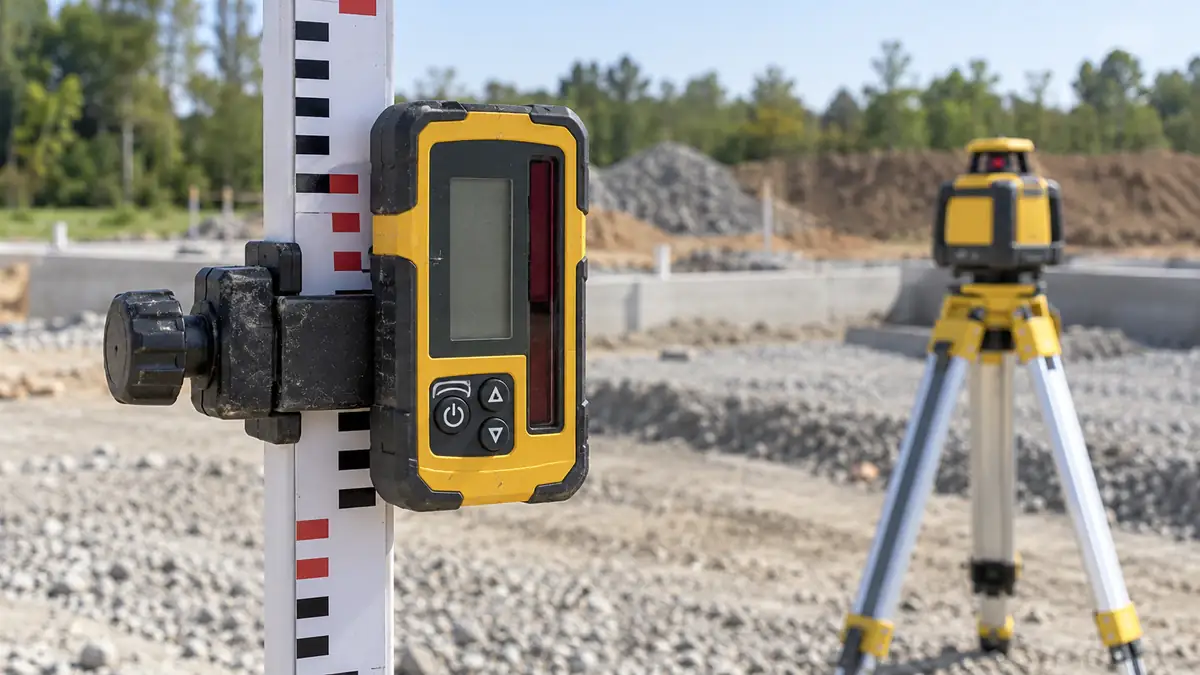
The beam disappears in daylight, but the measurement still needs to happen. A compatible receiver can turn an almost invisible reference into a clear direction signal or numeric offset. The crucial word is compatible: matching the laser’s color is only one part of the pairing. The best laser level receiver must match the transmitter and operating mode before its display or mounting features become useful.
Pulsed line lasers and rotating-beam instruments use different detection arrangements. Some receivers show arrows and sound a tone, while others display how far the reading sits above or below the reference. A large number on the package may describe coverage diameter rather than distance from the laser.
These nine picks cover specific line-laser families and rotary reading systems, with their different compatibility limits explained beside each review. Start with the model you own, then choose the display and mounting arrangement that suits your measurements. A more elaborate readout cannot rescue an unsupported transmitter pairing.
Quick Answer
- Best Overall: Bosch LR8. Select Bosch pulsed red/green line lasers.
- Best for Compatible DEWALT Green Lines: DEWALT DW0892G. Compatible DEWALT green line lasers.
- Best for Supported Huepar Pulse Models: Huepar LR-8RG. Specified Huepar pulsed red/green line lasers.
Compare the Nine Picks
| Product | Best fit | Compatibility | Power and mounting |
|---|---|---|---|
| Bosch LR8 | Best Overall | Select Bosch pulsed red/green line lasers | Two AA batteries; Quick-release rod bracket and magnets |
| DEWALT DW0892G | Best for Compatible DEWALT Green Lines | Compatible DEWALT green line lasers | 9V battery supply; Detector clamp for elevation transfer |
| Huepar LR-8RG | Best for Supported Huepar Pulse Models | Specified Huepar pulsed red/green line lasers | Battery-powered receiver; Two-sided indication, magnet and rod clamp |
| Milwaukee 48-35-1211 | Best for Milwaukee Line and Plane Lasers | Milwaukee cross-line and plane lasers | Two AA batteries; Two magnetic sides and material clamp |
| Spectra Precision HL450 | Best for Numeric Rotary Offsets | Compatible visible rotary lasers | AA battery supply; Digital elevation readout and rod clamp |
| Spectra Precision HL700 | Best Large Reception Window | Compatible visible rotary lasers | AA battery supply; Large reception window and digital readout |
| Topcon LS-80X | Best for a Compatible Topcon Rotary Setup | Compatible Topcon red rotary lasers | AA battery supply; Handheld or rod-clamped reading |
| Bosch LR10 | Best for a Supported Bosch Red Rotary | Compatible red rotary lasers | Battery-powered receiver; Rod mounting bracket |
| Johnson Level 40-6705 | Best Simple LED Rotary Detector | Red rotary beams at 635/650nm | Two AAA batteries; Included grade-rod clamp |
1. Bosch LR8 (Best Overall)

The LR8 is a useful first choice when you own one of Bosch’s supported line models. Its backlit display, two-sided indicators, and mounting bracket make the reference easier to read from different positions. The exact transmitter determines the usable extended range.
The LR8 supports selected Bosch line models, including the GLL3-330CG, GLL3-300, and GCL 2-160. It has a backlit LCD, indicators visible from both sides, adjustable audio, and a rod bracket. Bosch quotes 330-foot diameter with the GLL3-330CG and 300-foot diameter with the GLL3-300; these are not instrument-to-receiver radii.
Pros
- Specified red/green line compatibility.
- Backlit LCD.
- Indicators on both sides.
- Adjustable audio.
- Rod bracket and magnets.
Cons
- Not a rotary-laser receiver.
- Range depends on the paired transmitter.
Check the model list before ordering. This is a line receiver, and its diameter figures should not be read as one-sided working distances.
To buy this product, click here.
2. DEWALT DW0892G (Best for Compatible DEWALT Green Lines)

The DW0892G is the relevant detector family for compatible DEWALT green line models such as the DW089LG. It can help when the line is difficult to see on the target surface. The clamp supports elevation readings without requiring the operator to hold the detector against every mark.
The DW0892G is a detector for compatible DEWALT green line lasers, including the DW089LG. Audible and visual indicators help locate the reference when a visible line is difficult to read. Its clamp supports rod-mounted readings; confirm the exact transmitter against the current compatibility instructions before pairing.
Pros
- Specified DEWALT green-line pairing.
- Audible indication.
- Visual detection display.
- Rod clamp arrangement.
- Fine/coarse detection settings.
Cons
- Green beam color alone does not establish compatibility.
- Not a red rotary receiver.
Confirm the exact transmitter and manual revision. A green DEWALT beam alone is not enough evidence of a supported pairing.
To buy this product, click here.
3. Huepar LR-8RG (Best for Supported Huepar Pulse Models)

The LR-8RG suits supported Huepar pulse-mode line instruments. Its two-sided feedback and clamp are useful when the detector must move along a rod or reference surface. Keep the pairing model specific rather than treating the receiver as an upgrade for every Huepar laser.
The LR-8RG supports specified Huepar pulse-mode models including the 902CG, LS04CG, and HM03CG. Its two-sided indicators and audible guidance help locate the center reference; the manual calls for at least seventeen feet between receiver and transmitter. The selected receiver includes a clamp; Huepar models without receiver support, such as the M9011G, are not made compatible by switching accessories.
Pros
- Supported Huepar red/green line detection.
- Two-sided indication.
- Audible guidance.
- Rod clamp supplied.
- Useful in bright conditions with the correct transmitter.
Cons
- Not for non-pulsing Huepar models.
- No universal cross-brand compatibility.
A non-receiver-compatible model remains incompatible. Check the transmitter’s detector mode and the current receiver compatibility information together.
To buy this product, click here.
4. Milwaukee 48-35-1211 (Best for Milwaukee Line and Plane Lasers)

The 48-35-1211 adds receiver feedback to Milwaukee’s specified cross-line and plane family. Two magnetic sides can help with suitable steel positioning, while the material clamp supports another mounting route. Front and rear LEDs keep the center indication visible from more than one direction.
Milwaukee specifies the 48-35-1211 for its cross-line and plane lasers. Front and rear LEDs, adjustable audio, and fine/coarse settings provide different feedback options. Two magnetic sides and the included material clamp support positioning; it is distinct from Milwaukee’s dedicated rotary receivers.
Pros
- Specified Milwaukee line/plane support.
- Front and rear LEDs.
- Two magnetic sides.
- Adjustable audio.
- Material clamp and AA cells included.
Cons
- Not the receiver for Milwaukee M18 rotary lasers.
- No numeric elevation-offset display.
It is not the receiver for Milwaukee’s M18 rotary systems. Match the family before comparing the rest of the features.
To buy this product, click here.
5. Spectra Precision HL450 (Best for Numeric Rotary Offsets)
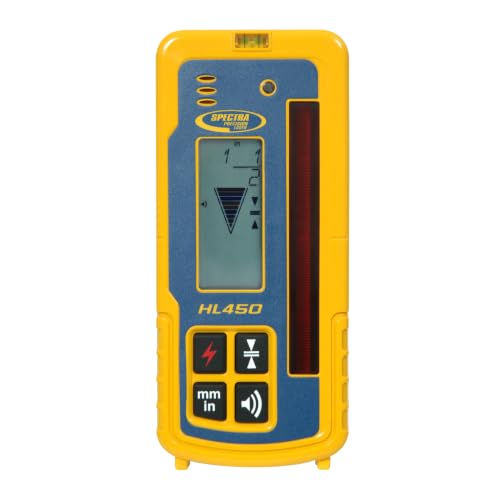
The HL450 is useful when an arrow is not enough and you want to understand the remaining elevation difference. Its numeric readout suits repeated rod measurements with compatible rotary equipment such as the LL300N. That can make adjustments more deliberate than repeatedly chasing a tone.
The HL450 provides a numeric elevation offset from the laser reference. The readout makes the remaining difference easier to interpret than an arrow alone. It is a documented partner for the LL300N; confirm the detectable spectrum and operating limits before pairing with a different transmitter.
Pros
- Numeric elevation-offset readout.
- Direction guidance.
- Rod-based measurement workflow.
- Documented LL300N pairing.
- Selectable reading units.
Cons
- Not a universal pulsed-line detector.
- Digital readout does not measure ground distance.
The number is an offset from the reference beam. It is not the distance to the ground or a replacement for the rod measurement.
To buy this product, click here.
6. Spectra Precision HL700 (Best Large Reception Window)

The HL700 adds a broad reception window and front-and-rear digital displays. That is useful when finding the beam and reading the remaining offset are frequent parts of the job. The arrangement suits a rod-based rotary workflow rather than an occasional visible wall line.
The HL700 provides a five-inch reception window and digital elevation readout. Front and rear displays let the operator read the offset from either side of the rod. It is a documented companion to Spectra horizontal rotary equipment such as the LL500; verify spectrum and transmitter suitability for other combinations.
Pros
- Large reception window.
- Numeric elevation offset.
- Front and rear displays.
- Multiple reading units.
- Rod-mounted measurement arrangement.
Cons
- Larger than a compact line detector.
- Compatibility still requires a supported rotary signal.
Confirm the transmitter’s signal and spectrum against the receiver specifications. A large window does not make an unsupported pairing work.
To buy this product, click here.
7. Topcon LS-80X (Best for a Compatible Topcon Rotary Setup)

The LS-80X is a focused replacement or additional receiver for supported Topcon equipment, including the RL-H5A. Its visual direction and audio serve straightforward height transfer. Keeping the receiver family consistent can simplify the working arrangement of an existing system.
The LS-80X is a rotary receiver for compatible Topcon equipment such as the RL-H5A. Visual height-direction indication and audio guide the operator toward the reference. Its practical role is repeated elevation transfer on a rod; confirm whether the selected listing includes the holder needed for your rod.
Pros
- Known RL-H5A pairing.
- Visual direction guidance.
- Audible feedback.
- AA operation.
- Handheld or rod-based workflow.
Cons
- Not a cross-line receiver.
- Check holder inclusion and rod fit.
Verify the holder supplied with the selected listing. A receiver that works electronically still needs a clamp that fits the rod securely.
To buy this product, click here.
8. Bosch LR10 (Best for a Supported Bosch Red Rotary)

The LR10 is the Bosch comparison to make when the transmitter is a supported red rotary rather than a line laser. Its backlit display and audio guide the height reading. It is the receiver named in the selected GRL900-20HVK system.
The LR10 is a red-beam rotary receiver, unlike Bosch’s LR8 line detector. A backlit LCD and audible indication help locate the reference in bright or darker working conditions. It is the receiver identified in the selected GRL900-20HVK package; match the transmitter and current operating instructions for other pairings.
Pros
- Red rotary detection.
- Backlit LCD.
- Audible guidance.
- Rod-mounting arrangement.
- Known pairing with the selected GRL900-20HVK kit.
Cons
- Not a pulsed-line receiver.
- Not for green-only rotary pairings.
Do not substitute it for an LR8 on a cross-line instrument. Receiver family and beam signal come before brand familiarity.
To buy this product, click here.
9. Johnson Level 40-6705 (Best Simple LED Rotary Detector)

The Johnson 40-6705 keeps the interface focused with one-button operation, LEDs, and audio. It is useful when a simple reference indication is enough and the rotary beam meets the documented wavelength requirements. The selected package includes the rod clamp and AAA cells.
The 40-6705 locates red rotary beams at the wavelengths identified in its manual. Its one-button design uses bright LEDs and audio rather than a numeric elevation display. The selected package includes two AAA batteries and a rod clamp, with automatic shutoff after inactivity.
Pros
- Simple one-button control.
- Bright LED indication.
- Audible reference signal.
- AAA batteries included.
- Grade-rod clamp included.
Cons
- No numeric offset readout.
- Not for pulsed cross-line or green-beam applications.
There is no numeric offset display. Choose it for supported red rotary detection rather than a pulsed-line or green-beam application.
To buy this product, click here.
Choosing the Best Laser Level Receiver
Identify the Transmitter Before Shopping
Write down the exact laser model and determine whether it is a pulsed line instrument or a rotary unit. Then consult its supported receiver information. Shared color, brand, or a similar range figure does not establish that the detector can interpret the signal. Begin by confirming receiver compatibility with the transmitter, including the required operating mode and reference family.
Understand the Readout You Need
LED arrows and tones help move toward the reference. A numeric receiver shows the remaining elevation offset within its reception window. Neither tells you the absolute height of the ground. The rod, benchmark, and measurement method still establish the elevation relationship.
Separate Radius and Diameter
A 330-foot operating diameter can represent coverage on both sides of a centrally positioned transmitter. It does not mean the receiver can stand 330 feet away from that transmitter. Check the actual instrument-to-receiver limit and leave the required path clear.
Use the Correct Operating Mode
A supported line laser may require pulse or detector mode, while a rotary receiver needs its specified rotating signal. Follow both manuals for settings and limitations. Do not diagnose a failed pairing from beam color alone or assume a receiver can detect every static laser spot.
Check Clamp Fit and Reference Marks
A secure clamp prevents the receiver from sliding while readings are compared. Identify the detector’s center mark and how it relates to the rod scale. Keep that relationship consistent through a sequence so moving the clamp does not quietly change the measurement. The method for using the receiver to read a field reference shows why a secure clamp still needs a correctly understood index and rod scale.
Treat Detection Tolerance Separately
Fine and coarse settings change the detector’s indication window; they do not recalibrate the transmitter. The complete measurement also depends on laser accuracy, rod orientation, support stability, and reading technique. Use the relevant settings and recheck the benchmark after a disturbance.
FAQ
Will a Red-and-Green Receiver Work with Any Laser?
No. It must support the signal type and transmitter arrangement as well as the wavelength. A receiver advertised for both colors can still be limited to specific pulsed line models or rotary equipment.
Can a Line Receiver Detect a Rotary Laser?
Do not assume so. The models here are separated by their documented role. Use a rotary receiver for the supported rotary transmitter and a line detector for its supported line family.
Does Numeric Readout Show the Ground Height?
It shows the offset between the beam and the receiver’s reference position. Ground elevation still comes from the rod reading and the established benchmark.
Why Does the Detector Not Respond to a Visible Line?
The transmitter may be incompatible, the required detector mode may be off, or the beam may be outside the reception window. Check the exact pair and both operating instructions before changing accessories.
Can I Add a Receiver to the Huepar M9011G?
No. That transmitter does not support receiver operation. A compatible receiver cannot add a signal mode the instrument does not provide.
Does Fine Mode Improve the Laser’s Accuracy?
No. It changes the detector’s indication tolerance. The transmitter’s specified accuracy and the stability of the complete measurement setup remain separate limitations.
Final Verdict
The Bosch LR8 is our leading choice for its supported Bosch line models. Choose the DW0892G, Huepar LR-8RG, or Milwaukee 48-35-1211 only when the exact transmitter belongs to that receiver’s documented family.
For rotary work, the Spectra digital models add useful offset information, while the Topcon, Bosch LR10, and Johnson choices serve specific reading arrangements. Establish compatibility first, then choose the feedback and clamp that make the measurement easiest to repeat.
