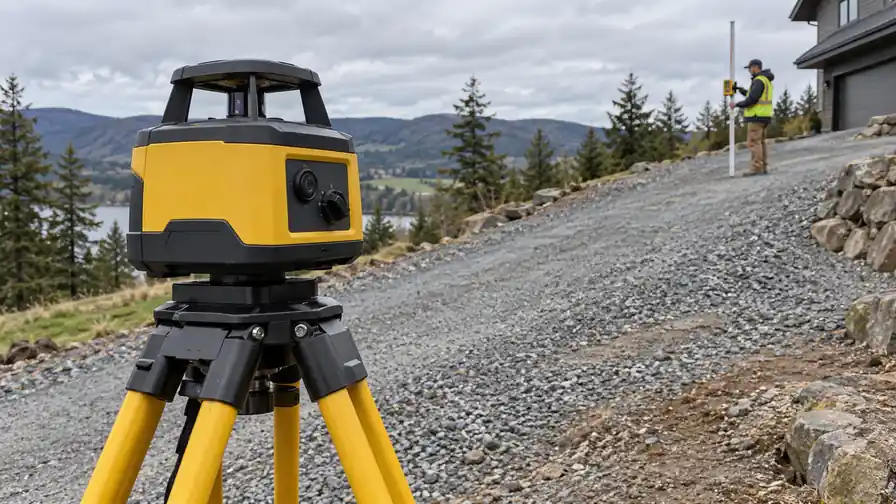
A plane can be tilted without being set to the grade the project needs. That distinction is the heart of choosing a slope-capable rotary laser. Some instruments let you adjust an axis manually; others accept numerical grade settings and support more involved receiver-assisted workflows. The best rotary laser level with slope depends on whether you need manual inclination or a documented grade-control function for the planned work.
The receiver also changes the system. Automatic grade matching or a plane-holding function can depend on a specific communicating receiver, not simply any detector that finds the beam. A transmitter-only package may therefore leave a substantial part of the intended workflow to be assembled separately.
These nine options cover numerical dual-grade tools and documented manual-slope alternatives. Choose the control method first, then check axes, receiver pairing, remote functions, and package contents. The useful system is the one you can establish and verify against the intended layout.
Quick Answer
- Best Overall: Spectra Precision GL1425C-BCC. Automatic dual-grade rotary.
- Best Advanced Radio-Control Package: Spectra Precision GL622N Kit. Automatic dual-grade rotary.
- Best Topcon Dual-Grade Alternative: Topcon RL-HV2S with LS-80X. Horizontal/vertical rotary with dual grade.
Comparison Table
| Product | Best fit | Reference layout | Power and positioning |
|---|---|---|---|
| Spectra Precision GL1425C-BCC | Best Overall | Automatic dual-grade rotary | B10 NiMH pack and CH10 charger in selected package; Bluetooth control; receiver separate |
| Spectra Precision GL622N Kit | Best Advanced Radio-Control Package | Automatic dual-grade rotary | Rechargeable NiMH pack and charger; HL760 receiver and radio remote in selected package |
| Topcon RL-HV2S with LS-80X | Best Topcon Dual-Grade Alternative | Horizontal/vertical rotary with dual grade | Battery-powered rotary system; Selected LS-80X receiver and case package |
| Milwaukee M18 3704-21T System | Best Complete M18 Dual-Slope System | Red exterior dual-slope rotary reference | M18 rechargeable platform; Receiver, remote, grade rod and tripod |
| Bosch GRL2000-40HVK Kit | Best Manual Dual-Axis Field Kit | Horizontal/vertical rotary; manual dual slope | Battery-powered selected kit; Receiver, tripod, rod, remote and wall mount |
| Johnson JRT300-RDHV-S | Best Complete Manual Dual-Slope Alternative | Horizontal/vertical rotary with manual dual slope | Two supplied rechargeable batteries; alkaline-holder option; Receiver, remote, tripod and thirteen-foot rod |
| Spectra Precision LL1505C-BCC | Best Connected Manual Single-Axis Workflow | Horizontal rotary with manual slope | NiMH selected package; documented alkaline alternative; Bluetooth app control; receiver separate |
| Spectra Precision LL300N with HL450 | Best Optional Single-Axis Slope Route | Horizontal rotary reference | Four D-cell batteries; HL450 receiver and clamp; tripod separate |
| Topcon RL-H5A Receiver Kit | Best Focused Horizontal Tool with Manual Slope | Horizontal rotary reference | Specified D-cell or rechargeable configuration; Receiver holder; tripod separate |
1. Spectra Precision GL1425C-BCC (Best Overall)

Entering two grade settings is different from manually tilting a level reference. The GL1425C serves the numerical dual-grade task with automatic leveling and Bluetooth control. Its selected BCC package is a transmitter-and-power starting point, with the appropriate receiver arrangement planned separately.
The GL1425C provides automatic leveling and numerical dual-grade control, with Bluetooth app operation. Grade Match and PlaneLok require the appropriate compatible receiver arrangement rather than Bluetooth alone. The linked BCC package identifies the battery, charger, and compact case but explicitly excludes the receiver; grade limits also depend on whether the optional tilt arrangement is used. The selected BCC package is important: it leaves the receiver out. Grade Match and PlaneLok need the appropriate compatible arrangement, so plan those components before comparing the finished system. Its larger advertised grade capability also depends on the specified tilt setup rather than being available from every ordinary instrument position.
Pros
- Numerical dual-grade control.
- Automatic leveling.
- Bluetooth app control.
- Compatible Grade Match and PlaneLok workflows.
- Battery, charger, and case package.
Cons
- Receiver is not included.
- Extended grade capability needs the specified tilt arrangement.
The GL1425C is best matched to a buyer who specifically needs numerical dual-grade control and is prepared to assemble the corresponding receiver system. Its BCC package should be evaluated as that starting point, not as a complete field kit. The GL622N includes a more developed radio-accessory arrangement, while the manual-slope tools serve another workflow. For repeated numerical grade work with the required compatible components planned, the GL1425C provides a clear reason to choose a dedicated grade instrument over a level laser that can merely be tilted.
To buy this product, click here.
2. Spectra Precision GL622N Kit (Best Advanced Radio-Control Package)

Grade work can depend on communication between the transmitter and receiver rather than detection alone. The GL622N supports advanced workflows with the selected radio accessories. That makes the HL760 and remote part of the buying decision alongside numerical dual-grade control.
The GL622N offers numerical dual-grade control along with horizontal and vertical alignment functions. Its documented advanced workflows include Grade Match, PlaneLok, and automatic axis alignment with the supported radio accessories. The linked kit identifies an HL760 receiver, C70 clamp, radio remote, rechargeable battery supply, and charger; a tripod and rod are separate. Those functions still require the documented setup and a verified baseline. Automatic axis alignment helps with a specific alignment task; it does not determine where the project’s grade should run. The tripod and rod remain separate, so the complete measuring system should be planned around the instrument and receiver together.
Pros
- Numerical dual grade.
- Grade Match workflow.
- PlaneLok with supported accessories.
- Automatic axis alignment.
- Receiver, clamp, remote, and rechargeable supply included.
Cons
- Tripod and rod are separate.
- Advanced controls require a deliberate setup routine.
The GL622N earns its place when Grade Match, PlaneLok, and axis-alignment workflows form part of the operator’s actual work. The selected receiver and radio remote make those capabilities a system-level purchase rather than isolated transmitter features. A simple horizontal datum would not justify that whole control arrangement. For a buyer who needs the advanced functions and will learn their setup, this Spectra kit offers a coherent starting point, with the separate tripod and rod chosen around the intended measuring method.
To buy this product, click here.
3. Topcon RL-HV2S with LS-80X (Best Topcon Dual-Grade Alternative)

Horizontal, vertical, and dual-grade tasks give the RL-HV2S several distinct roles. The selected listing pairs it with an LS-80X receiver, while app functions support remote operation. Its useful scope is broader than a horizontal-only reference, with actual slope conditions kept attached to the specified setup.
The RL-HV2S combines horizontal and vertical operation with dual-grade settings. Topcon’s documentation distinguishes the standard slope range from the larger range available with a separate tilting plate. The selected listing identifies an LS-80X receiver and case; the Laser Manager phone app supports remote functions, while tripod and rod are separate. Topcon distinguishes standard grade capability from the larger range available with a separate tilting plate. Keep that condition attached to the purchase decision instead of carrying the highest number into an ordinary tripod setup. The included receiver and case do not mean a tripod and rod are supplied.
Pros
- Dual-grade settings.
- Horizontal and vertical operation.
- Laser Manager app support.
- LS-80X receiver in the selected kit.
- Case package.
Cons
- Larger slope range needs a separate tilting plate.
- Tripod and rod are separate.
The RL-HV2S is a useful alternative for someone who needs numerical dual grade alongside horizontal and vertical construction references. The selected LS-80X package gives it a defined reading arrangement, with support equipment still separate. Its extended slope capability must stay attached to the required tilting plate condition. For a buyer who will use those broader operating roles, the Topcon has a clear case; a focused horizontal job with occasional manually established slope may not need this class of instrument.
To buy this product, click here.
4. Milwaukee M18 3704-21T System (Best Complete M18 Dual-Slope System)

A dual-slope transmitter becomes a complete field purchase only when the reading and support components are included. The selected Milwaukee system supplies those parts with the M18 instrument. Its remote is useful when the reference needs judging at a station away from the controls.
The 3704 exterior dual-slope family supports slope adjustment through its controls and remote. The selected T-style package identifies a receiver, remote, grade rod, and tripod. Its published coverage is a diameter; slope setup still needs the documented axis orientation and a checked reference. The critical setup is still the relationship between the marked axes and the intended grade direction. A correct control change on the wrong axis creates the wrong reference. Use the documented sequence and check known points before transferring the plane to permanent marks. Its coverage figure is a diameter, not a one-sided receiver distance.
Pros
- Dual-slope capability.
- Remote slope adjustment.
- Compatible receiver package.
- Tripod and rod in the selected system.
- M18 battery platform.
Cons
- More controls than a level-only reference needs.
- Large transport and setup footprint.
The Milwaukee system is particularly relevant when an M18 user wants the dual-slope transmitter and complete field accessories together. The remote is useful because a grade reference is often judged away from the instrument, but the axes still need to match the intended directions before commands are meaningful. Someone already equipped with suitable field supports may compare a different package. For a complete planned M18 workflow, the selected system brings the control and measurement components into one purposeful arrangement.
To buy this product, click here.
5. Bosch GRL2000-40HVK Kit (Best Manual Dual-Axis Field Kit)

Known endpoints can establish a valid manual-slope method without numerical entry. The GRL2000-40HVK provides two-axis manual adjustment with complete field accessories. It suits an operator who will set and independently verify the incline rather than expect the controls to define it automatically.
Manual dual-slope adjustment allows the reference angle to be changed on both axes. Electronic self-leveling and a disturbance monitor support repeatable site setup. The linked complete package includes a receiver, tripod, grade rod, remote, wall mount, and carrying case. Manual dual slope should not be confused with entering a numerical grade value. The useful comparison is the workflow you can repeat accurately. Establish the required endpoint relationship, identify the axes, and check the reference rather than treating an available tilt control as automatic grade monitoring.
Pros
- Manual slope adjustment on two axes.
- Horizontal and vertical operation.
- Electronic self-leveling.
- Disturbance monitor.
- Receiver, tripod, rod, and remote included.
Cons
- Manual slope is different from automatic numeric grade entry.
- Complete kit takes more storage space than a line laser.
The GRL2000-40HVK suits a buyer whose grade method is established manually from known references and who wants the receiver, tripod, rod, and remote included. That is a valid workflow with a different purchase rationale from numerical entry. If repeated grade values must be set directly, the Spectra or Topcon grade models deserve closer attention. For the endpoint-based manual method, the Bosch’s complete package is useful when the operator can verify the plane deliberately rather than expecting a tilt control to establish the design.
To buy this product, click here.
6. Johnson JRT300-RDHV-S (Best Complete Manual Dual-Slope Alternative)

A complete support-and-reading package gives manual two-axis adjustment its field context. The JRT300-RDHV-S includes the receiver, remote, tripod, and rod. Its two rechargeable batteries add another practical preparation option for a sequence of checked slope measurements.
The JRT300-RDHV-S supports adjustment of the reference on its marked X and Y slope axes. The S system includes the receiver and clamp, remote, tripod, thirteen-foot rod, two rechargeable batteries, and hard case. Its manual slope controls are different from entering a numerical percentage; the operating guide also distinguishes manual-mode accuracy from automatic leveling specifications. The manual explains that manual-mode accuracy depends on the operator’s setup, so automatic leveling specifications should not be carried into a tilted plane without qualification. Use independent reference checks at the intended points. The remote mirrors useful controls, but it does not turn the system into numerical percentage entry.
Pros
- Manual slope on two axes.
- Receiver and remote included.
- Tripod and rod supplied.
- Two rechargeable batteries.
- Horizontal and vertical operating positions.
Cons
- No supported numeric percentage-entry claim.
- Manual slope requires independent reference checks.
The Johnson system is a convincing manual-slope package for someone who wants the reading and support equipment together. Its two-axis adjustment and remote are useful when the incline is established against known references. They are not numerical percentage entry, and the manual-mode accuracy distinction matters. A buyer comfortable with that checked setup can give the JRT300-RDHV-S a clear field role. Someone whose work depends on entering grade values should make that requirement decisive and compare the dedicated numerical models instead.
To buy this product, click here.
7. Spectra Precision LL1505C-BCC (Best Connected Manual Single-Axis Workflow)
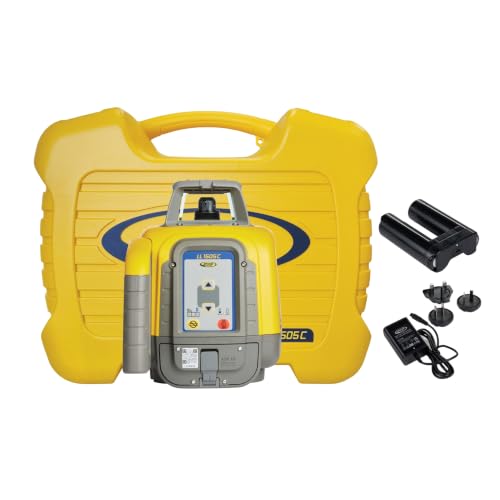
A manually sloped direction with the other axis automatically level is a specific workflow. The LL1505C supports that single-axis method alongside connected control. The important purchase distinction is the operating arrangement, with the separate receiver and any advanced communicating functions considered explicitly.
The LL1505C provides automatic horizontal leveling and manual slope control. Its single-axis workflow slopes Y while X remains automatically leveled; the manually controlled axis is not automatically monitored for drift. Bluetooth control is built in, and the advanced Plane Match workflow requires an HL760; the selected BCC package does not identify a receiver, tripod, or rod. The manually controlled axis is not automatically watched for drift, which makes reference checks part of the method. Advanced Plane Match requires an appropriate HL760 arrangement, and this BCC package leaves the receiver separate. Bluetooth operation changes how commands are sent; it does not remove those optical and package requirements.
Pros
- Automatic horizontal leveling.
- Documented single-axis slope workflow.
- Bluetooth app operation.
- Alternative alkaline operation.
- Height-of-instrument alert.
Cons
- Receiver and field support are separate in this package.
- Manual slope is not numerical grade entry.
The LL1505C is a useful fit when the single-axis manual workflow matches the job and connected control improves the checking position. The retained automatic leveling on the other axis is a meaningful distinction, while the manual direction still needs monitoring. Its separate receiver requirement should be included in the system plan. For an operator who understands those conditions, the Spectra offers purposeful connected control; Bluetooth alone is not a reason to choose it over a simpler or more specialized grade arrangement.
To buy this product, click here.
8. Spectra Precision LL300N with HL450 (Best Optional Single-Axis Slope Route)

A mostly horizontal tool can still have a planned optional slope role. The LL300N provides a documented single-axis workflow with the required RC601 remote. The selected HL450 adds numeric offset feedback for the reading task, which is different from numerical grade control at the transmitter.
The LL300N combines automatic horizontal leveling with a protective rotor housing and IP66 enclosure. The selected alkaline package includes an HL450 receiver and clamp but does not include a tripod. Its single-axis slope workflow requires the optional RC601 remote, with leveling retained on the other axis. The receiver readout is not a numerical grade setting on the transmitter. Keep that distinction clear when comparing this instrument with the automatic grade models. If the optional remote is absent, do not assume the full slope workflow is available from the supplied equipment alone. A level datum with calculated offsets remains a separate measurement method.
Pros
- Automatic horizontal leveling.
- IP66 enclosure.
- Protective rotor housing.
- HL450 receiver included.
- Optional single-axis slope workflow.
Cons
- Tripod and rod are separate in this package.
- RC601 remote is separate.
The LL300N is most attractive when horizontal work remains the everyday role and the documented single-axis slope method is an occasional planned extension. The required RC601 and separate field supports must be considered alongside the included HL450. A numeric receiver display does not change the transmitter into a numerical grade laser. For a buyer with that distinction clear, the Spectra can serve a coherent level-reference routine with an optional slope route, without making advanced dual-grade controls part of work that rarely needs them.
To buy this product, click here.
9. Topcon RL-H5A Receiver Kit (Best Focused Horizontal Tool with Manual Slope)

Occasional manual slope and repeated numerical-grade work need different instrument comparisons. The RL-H5A favors a focused horizontal routine with supported manual slope when required. Its receiver package suits an outdoor reading system that does not need the fuller controls of a dedicated grade laser.
Topcon specifies an 800-meter working diameter and ±10 arc-second horizontal accuracy for the RL-H5A. Electronic horizontal self-leveling and IP66 protection suit outdoor elevation work with a receiver. The selected listing identifies an LS-80L receiver and holder; verify the exact battery and support-equipment bundle. Establish the intended incline through the documented procedure and known references. The receiver tells you where the beam is, not what the design grade should be. If repeated numerical grade changes or communicating receiver functions are central to the work, compare the more specialized models rather than stretching this focused tool into another class.
Pros
- Horizontal rotary reference for elevation checks.
- Receiver and holder identified in the selected kit.
- Electronic self-leveling.
- Documented IP66 protection.
- Manual slope capability described by the manufacturer.
Cons
- Not a three-plane interior wall-layout tool.
- Tripod, rod, and exact battery bundle need separate confirmation.
The RL-H5A is the focused alternative for someone whose normal task is horizontal elevation transfer, with a supported manual-slope procedure used when a defined layout calls for it. That can be a better match than a numerical grade system with mostly unused controls. The purchase should change when numerical settings or communicating receiver functions become recurring requirements. For the simpler routine, the Topcon’s clear role and receiver package make sense, with the tripod, rod, and independent reference checks completing the working arrangement.
To buy this product, click here.
Choosing the Best Rotary Laser Level with Slope
Distinguish Manual Slope from Numerical Grade
Manual adjustment tilts a reference that must be established and checked. Numerical grade control accepts a grade setting through the supported interface. Choose the method required by the job before comparing range or remote controls. Work through relating slope settings to the intended grade before treating a manual tilt and a numerical setting as the same operation.
Identify the Controlled Axes
Single-axis slope can retain automatic leveling on the other axis. Dual-axis control can change both directions. The instrument’s physical orientation must match the intended grade directions before those controls are useful.
Check Communicating Receiver Requirements
Grade Match, Plane Match, and PlaneLok can require specific accessories and signal communication. A detector that merely locates the beam is not automatically sufficient. Read the exact transmitter/receiver combination.
Keep Grade Limits Attached to Conditions
A larger advertised range may need a separate tilting plate or a particular setup. Do not transfer the highest figure into every ordinary mounting position. Check the required accessories before assembling the system.
Verify the Reference Independently
Use the project’s known points, preserved benchmark, and documented operating sequence. Manual axes may require monitoring for change. A remote or app makes control convenient but is not independent proof of correct grade. The routine for establishing a rotary reference before the slope checks provides an independent starting relationship before the grade arrangement is evaluated.
FAQ
Does Any Tilting Rotary Laser Offer Numerical Grade Entry?
No. Manual slope controls and numerical settings are different functions. Choose according to the actual documented interface.
Is a Digital Receiver the Same as Digital Grade Control?
No. A receiver can show elevation offset without setting the transmitter’s grade numerically.
Does Bluetooth Add Grade Match Automatically?
No. The instrument must support the function and use the required compatible receiver arrangement.
Can I Use a Level Datum Instead of Slope Mode?
Yes, where the measurement plan represents the intended fall through calculated rod offsets. That is a different method from tilting the plane.
Why Does Axis Orientation Matter?
The slope controls act on the instrument’s defined axes. Those directions must align with the intended layout or the inclined reference will be wrong for the plan.
Final Verdict
The GL1425C is our overall choice for a numerical dual-grade system assembled with the correct receiver and supports. The GL622N offers a more developed radio-accessory workflow, and the selected Milwaukee package combines dual-slope capability with complete M18 field equipment. These choices make sense when their control method matches a recurring requirement rather than simply adding features to ordinary horizontal readings.
The manual Bosch, Johnson, and single-axis alternatives serve another valid approach, established and checked against known references. Keep numerical entry separate from a digital receiver’s offset display, and keep communicating functions tied to the required accessories. Once the axes, grade method, and verification points are clear, the final comparison becomes practical: which system can establish and preserve the intended reference with the equipment and operating routine the work actually needs?
