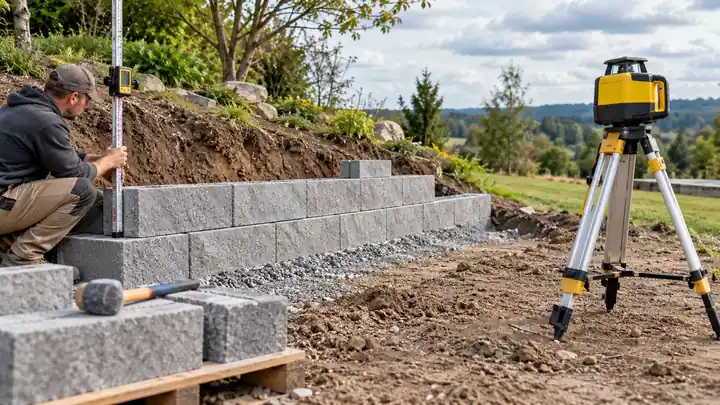
The first course can look convincing while the planned wall still needs a clearer relationship to the ground around it. A retaining-wall layout may involve level sections, stepped elevations, and repeated checks along a base. A common datum makes those relationships easier to measure. The best laser level for retaining wall layout should help transfer the specified heights while keeping the benchmark connection clear between readings.
The laser supplies the reference, not the wall design. Base preparation, setbacks, drainage details, reinforcement, and structural requirements belong to the actual system and project. A receiver-based rotary arrangement is useful for transferring the chosen elevations in daylight.
These nine picks emphasize repeated horizontal readings and practical field packages. Choose around the intended course and base marks, rod units, and available support equipment. The goal is a measuring setup that remains connected to its benchmark as excavation and construction change the site.
Quick Answer
- Best Overall: Topcon RL-H5A Receiver Kit. Horizontal rotary reference.
- Best Numeric Offset Receiver Package: Spectra Precision LL300N with HL450. Horizontal rotary reference.
- Best Complete Mixed-Use Field Kit: Bosch GRL900-20HVK Kit. Horizontal and vertical rotary operation.
Comparison Table
| Product | Best fit | Reference layout | Power and positioning |
|---|---|---|---|
| Topcon RL-H5A Receiver Kit | Best Overall | Horizontal rotary reference | Specified D-cell or rechargeable configuration; Receiver holder; tripod separate |
| Spectra Precision LL300N with HL450 | Best Numeric Offset Receiver Package | Horizontal rotary reference | Four D-cell batteries; HL450 receiver and clamp; tripod separate |
| Bosch GRL900-20HVK Kit | Best Complete Mixed-Use Field Kit | Horizontal and vertical rotary operation | Selected alkaline-battery kit; LR10 receiver, BT160 tripod and grade rod |
| Johnson Level 99-027K System | Best Complete Level-Reference System | Horizontal rotary; manual vertical alignment | Four C-cell batteries; Detector, tripod and 13-foot rod |
| Spectra Precision LL100N-2 Kit | Best Included Inch-Graduated Package | Horizontal rotary reference | Two D-cell batteries; Tripod, HR320 receiver and inch-graduated rod |
| Spectra Precision LL500 with HL700 | Best Deliberate Horizontal Benchmark | Horizontal rotary reference | Four D-cell batteries; Three-screw base; HL700 receiver |
| Bosch GRL2000-40HVK Kit | Best Manual Dual-Slope Versatility | Horizontal/vertical rotary; manual dual slope | Battery-powered selected kit; Receiver, tripod, rod, remote and wall mount |
| DEWALT DW074KD | Best with Existing Field Supports | Horizontal rotary; manually aligned vertical mode | Two D-cell batteries; DW0742 detector, clamp and wall mount |
| Milwaukee M18 3701-21T System | Best Complete M18 Field Arrangement | Red exterior horizontal rotary reference | M18 rechargeable platform; 3711 receiver, tripod and grade rod |
1. Topcon RL-H5A Receiver Kit (Best Overall)

Base and course marks need a common datum even when the planned wall uses several elevations. The RL-H5A and its receiver serve repeated horizontal comparisons across the work area. That focused role keeps the measurement related to the plan rather than to each local patch of disturbed ground.
Topcon specifies an 800-meter working diameter and ±10 arc-second horizontal accuracy for the RL-H5A. Electronic horizontal self-leveling and IP66 protection suit outdoor elevation work with a receiver. The selected listing identifies an LS-80L receiver and holder; verify the exact battery and support-equipment bundle. A stepped wall does not require every mark to be at the same elevation. Record the intended changes and apply the correct offsets from the common reference. The receiver provides a reading point; the design determines which surface or component that point represents. Preserve the benchmark outside excavation and material handling.
Pros
- Horizontal rotary reference for elevation checks.
- Receiver and holder identified in the selected kit.
- Electronic self-leveling.
- Documented IP66 protection.
- Manual slope capability described by the manufacturer.
Cons
- Not a three-plane interior wall-layout tool.
- Tripod, rod, and exact battery bundle need separate confirmation.
The RL-H5A is a good match for a wall project where several planned elevations must remain related to one horizontal datum. It is especially relevant when suitable field supports are already available and the receiver package completes the intended reading method. The Bosch and Johnson complete systems are more attractive when those supports are missing. For focused outdoor height transfer, the Topcon has a clear purpose, with each planned base or course offset providing the connection between the reading and the wall design.
To buy this product, click here.
2. Spectra Precision LL300N with HL450 (Best Numeric Offset Receiver Package)

A numeric receiver can describe the remaining difference during repeated base-related checks. The LL300N with HL450 supports that reading style in a protected rotary package. It is useful where the same station records will remain relevant through preparation and construction.
The LL300N combines automatic horizontal leveling with a protective rotor housing and IP66 enclosure. The selected alkaline package includes an HL450 receiver and clamp but does not include a tripod. Its single-axis slope workflow requires the optional RC601 remote, with leveling retained on the other axis. The display does not identify the finished course height without the rod reading and planned offset. Keep the contact surface consistent and label each station. If a later section is stepped, the changed intended elevation should be clear in the records rather than introduced by moving the instrument and losing the original datum.
Pros
- Automatic horizontal leveling.
- IP66 enclosure.
- Protective rotor housing.
- HL450 receiver included.
- Optional single-axis slope workflow.
Cons
- Tripod and rod are separate in this package.
- RC601 remote is separate.
The LL300N and HL450 combination suits a buyer who values numerical feedback during repeated checks. The receiver can describe the remaining difference from the beam while the station record identifies the intended component height. Someone starting without a tripod and rod should also consider the complete field packages. With those supports planned, the Spectra is an appealing option for a deliberate sequence of readings, especially when the same datum must remain useful as construction changes the original access to the site.
To buy this product, click here.
3. Bosch GRL900-20HVK Kit (Best Complete Mixed-Use Field Kit)

A complete field package is useful when elevation transfer is being assembled from the beginning. The GRL900-20HVK supplies the receiver, tripod, and rod alongside its rotary instrument. Its broader operating roles become relevant when the same equipment will serve other defined building references.
The selected kit includes an LR10 receiver, tripod, grade rod, remote, wall mount, and case. Horizontal and vertical operation supports elevation transfer and interior alignment. Electronic leveling and a disturbance monitor help identify a changed setup; the linked package lists D-cell power for the transmitter. For wall-height checks, establish the benchmark and component offsets first. A base surface, block edge, and finished top can all sit at different relationships to the plane. The disturbance monitor helps identify a changed setup, while a benchmark return confirms that subsequent readings still relate to the original plan.
Pros
- Horizontal and vertical operation.
- Electronic leveling.
- Disturbance monitor.
- Receiver, tripod, and rod included.
- Remote and wall mount supplied.
Cons
- Larger package than a compact wall laser.
- Do not assume numeric slope entry.
The GRL900-20HVK is a coherent starting point for someone missing the main field measuring components. Its receiver, tripod, and rod give elevation transfer a practical setup, while the other rotary roles can serve related building work. An existing support kit may make a more focused package attractive instead. For a new system used around a retaining-wall project, the Bosch’s strongest argument is having the matched reading arrangement ready to be connected to a durable benchmark and clearly labeled component offsets.
To buy this product, click here.
4. Johnson Level 99-027K System (Best Complete Level-Reference System)
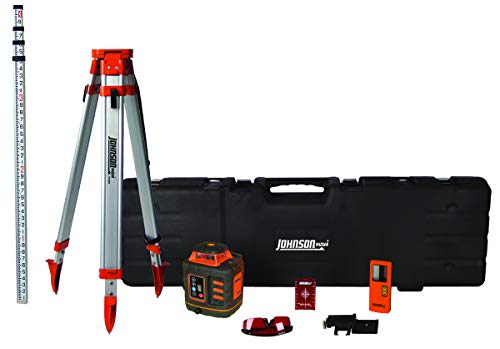
Planned steps can remain related to a horizontal reference without a slope mode. The 99-027K supplies the receiver and supports for that method. Its complete arrangement fits a wall layout in which recorded offsets, rather than a tilted plane, represent the intended elevation changes.
The 99-027K self-levels horizontally and supports manual vertical alignment with a split beam. The system includes a detector and clamp, tripod, dual-graduated grade rod, batteries, target, and hard case. Its IP66 housing and locking compensator support site use and transport; this model does not provide slope adjustment. This model has no slope adjustment, which helps define its role. Choose the correct rod face and keep the intended step changes explicit. A clear horizontal datum can remain useful across several sections if the original benchmark is preserved and the instrument is reconnected after any move.
Pros
- Detector, tripod, and rod included.
- Horizontal self-leveling.
- Dual rod graduations.
- IP66 enclosure.
- Locking compensator for transport.
Cons
- No slope-adjustment function.
- Vertical setup is manual.
The Johnson system suits a planned stepped wall measured through a horizontal reference and changing rod readings. Its lack of slope adjustment is not a drawback for that method. The complete accessories are especially useful when the buyer is assembling a field kit rather than adding one transmitter. A genuine inclined-reference task points toward another model. For the level-datum routine, the 99-027K has a focused role: make the planned differences comparable without changing the reference plane for every section.
To buy this product, click here.
5. Spectra Precision LL100N-2 Kit (Best Included Inch-Graduated Package)

Feet-and-inches records give an included inch-graduated rod a practical reason to matter. The LL100N-2 pairs that rod with a receiver and tripod. The package is useful when the equipment can follow the same reading convention throughout the wall’s planned stations.
The LL100N automatically establishes a horizontal reference and provides a height-change alert. This LL100N-2 package includes an HR320 receiver, rod clamp, tripod, inch-graduated rod, and system case. Manual slope operation requires the appropriate optional RC601 remote; it is not a numeric dial-in grade laser. The included rod convention should fit the actual measurement routine. Keep the same contact point and scale at each station, and record the offset for the component being checked. Optional slope operation requires its specified remote; the wall’s stepped or level references can still be checked through a horizontal datum.
Pros
- Horizontal self-leveling.
- Height-change alert.
- HR320 receiver and clamp included.
- Tripod and inch-graduated rod included.
- System case organizes the selected package.
Cons
- Optional remote is needed for the documented slope workflow.
- Not a three-plane interior line laser.
The LL100N-2 is a particularly relevant complete option when the wall layout and records use feet and inches. Its included rod then supports the measuring convention rather than creating another scale to translate during work. The optional slope remote should matter only if its separate workflow is required. For ordinary horizontal comparisons, this Spectra package can provide a useful beginning-to-end reading arrangement, with a stable benchmark keeping later base and course checks related to the original layout.
To buy this product, click here.
6. Spectra Precision LL500 with HL700 (Best Deliberate Horizontal Benchmark)

A long sequence of readings can reward one carefully established measuring station. The LL500 favors that deliberate horizontal routine with an HL700 receiver. It is relevant where the support can remain outside excavation and material movement while the checking positions change.
The LL500 uses a three-screw base and circular bubble for initial setup before its limited self-leveling compensation takes over. Its horizontal tolerance is specified at approximately ±1/16 inch at 100 feet. The selected package identifies an HL700 receiver, rod clamp, batteries, and case; tripod and rod are separate. The three-screw base needs correct initial alignment within the documented range. A careful first setup is valuable only if later activity does not move it unnoticed. Keep the benchmark accessible and return to it before accepting another series of measurements, particularly after material delivery or nearby ground disturbance.
Pros
- Dedicated horizontal elevation reference.
- Fine horizontal tolerance at a stated distance.
- HL700 receiver supplied in the selected package.
- Circular bubble and three-screw setup base.
- Replaceable D-cell supply.
Cons
- Initial setup is more manual than broad-range servo-leveling models.
- No automatic numeric grade entry.
The LL500 makes more sense for a stable measuring position than for a job requiring frequent hurried moves. The three-screw preparation is part of choosing that deliberate routine, while the HL700 provides useful reception and offset feedback afterward. A buyer who can keep the station outside excavation and material movement has the clearest reason to consider it. The package leaves the tripod and rod separate, making it most appealing when those components can be selected or reused to suit the actual wall-area measurements.
To buy this product, click here.
7. Bosch GRL2000-40HVK Kit (Best Manual Dual-Slope Versatility)

A wall following changing terrain does not automatically need the optical reference to slope. The GRL2000-40HVK adds manual dual-axis control for defined inclined-reference work, with complete field accessories. Its usefulness depends on whether that broader method belongs in the project.
Manual dual-slope adjustment allows the reference angle to be changed on both axes. Electronic self-leveling and a disturbance monitor support repeatable site setup. The linked complete package includes a receiver, tripod, grade rod, remote, wall mount, and carrying case. Choose the added control because another defined task needs it, not because a wall follows changing terrain. Manual slope is different from numerical grade entry, and a tilted plane does not establish the retaining system’s required geometry. Keep each measurement tied to the component and plan it actually represents.
Pros
- Manual slope adjustment on two axes.
- Horizontal and vertical operation.
- Electronic self-leveling.
- Disturbance monitor.
- Receiver, tripod, rod, and remote included.
Cons
- Manual slope is different from automatic numeric grade entry.
- Complete kit takes more storage space than a line laser.
The GRL2000-40HVK is worth choosing when its broader manual-slope capability will also be used for defined site work. A retaining wall’s planned steps alone do not require an inclined plane, and a horizontal method may remain easier to verify. Its complete field equipment is useful in either case. For a buyer who can identify the additional slope task in advance, the Bosch offers versatility with a purpose, instead of asking an unused feature to justify a more involved operating routine.
To buy this product, click here.
8. DEWALT DW074KD (Best with Existing Field Supports)

A suitable existing tripod and rod can make a matched detector package more appealing than another complete kit. The DW074KD supplies that horizontal reading arrangement. Its protective rotor cage is another documented feature relevant to equipment moving around an active wall site.
Horizontal operation self-levels, while vertical setup uses manual alignment. The kit includes a DW0742 detector and clamp, wall mount, target, contractor bag, and batteries. A protective cage surrounds the rotary head; the selected package does not include a full-height tripod. The selected package leaves the field supports separate, so check them before the first measuring session. Its manual vertical setup serves a different role from horizontal leveling. Preserve the benchmark and reconnect the setup after movement rather than using an existing wall edge as a substitute for the original datum.
Pros
- Horizontal self-leveling.
- Included compatible detector and clamp.
- Vertical alignment option.
- Wall mount supplied.
- Protected rotor head and storage bag.
Cons
- Vertical leveling is manual.
- Tripod and rod are separate.
The DW074KD is a sensible addition to a suitable existing tripod-and-rod setup. Its included detector and horizontal operating mode address the missing measurement role, without requiring every accessory to be bought again. Someone starting from nothing has a clearer reason to compare the complete Bosch or Johnson systems. For the existing-kit buyer, the DEWALT offers a focused way to transfer the planned wall elevations, with preserved reference marks and consistent component offsets doing the important work of keeping the readings comparable.
To buy this product, click here.
9. Milwaukee M18 3701-21T System (Best Complete M18 Field Arrangement)

A field receiver and support system give shared battery power a concrete measuring role. The selected Milwaukee exterior package supplies those parts with its M18 transmitter. It suits repeated outdoor height transfer where the complete arrangement, rather than the battery alone, is useful.
The selected exterior system combines the red rotary transmitter with a 3711 receiver. Its linked package identifies an M18 battery, charger, receiver clamp, tripod, grade rod, and case. Masking shutters and selectable bump sensitivity support controlled setup; quoted field coverage is a diameter rather than a receiver radius. The receiver is what makes the reference practical in bright conditions, while a consistent rod method makes the readings comparable. Place the instrument clear of excavation, compaction, and material movement. The package can simplify equipment preparation, but it does not decide the wall’s stepped geometry or structural details.
Pros
- Compatible receiver supplied.
- Tripod and grade rod included.
- M18 battery and charger package.
- Masking shutters.
- Selectable bump sensitivity.
Cons
- No dual-slope control like the 3704 family.
- Large field system for a simple indoor wall mark.
The Milwaukee package is especially relevant when the M18 platform already serves other outdoor tasks and a complete field reading arrangement is also needed. Those two benefits belong together; battery familiarity alone is not the reason it suits wall elevations. A smaller local line job calls for a different class of setup. For repeated receiver readings around the project, the included tripod and rod give the system a clear role, provided the measurement station stays connected to its benchmark as construction proceeds.
To buy this product, click here.
Choosing the Best Laser Level for Retaining Wall
Separate Wall Design from Elevation Transfer
The laser does not specify base details, setbacks, reinforcement, or drainage construction. Establish the required system and project dimensions first, then transfer the intended elevations. The explanation of separating level checks from planned elevation changes separates the measuring method from the wall and drainage design.
Label Level Sections and Steps
A wall following changing terrain may use planned steps rather than one sloping line. Record each intended elevation from the datum so the reference remains understandable through transitions. The process of carrying a height reference along an outdoor structure helps keep stepped sections and their control marks identifiable throughout the work.
Choose Consistent Reading Surfaces
Prepared base, block edge, and finished top are different references. Use the correct offset and contact point for each checking stage, with one rod graduation system.
Protect the Benchmark
Keep it outside excavation and material movement. Recheck it after interruptions or instrument warnings. A tripod can settle as nearby ground changes even without a direct knock.
Plan Receiver Access
The wall and stored blocks can obstruct later readings. Establish control marks while the path is clear, and reconnect a moved setup through a preserved reference.
FAQ
Will the Laser Design the Retaining Wall?
No. It transfers chosen references. Structural and system details need their own appropriate project information.
Should the Whole Wall Follow One Level Line?
Only where the design requires it. Planned steps or other elevation changes must be represented through the correct offsets.
Do I Need Slope Mode for a Stepped Wall?
Not necessarily. A horizontal datum can compare the different planned elevations through rod readings.
Why Use a Receiver Outdoors?
It can detect the supported rotary signal when visual projection is difficult to read in bright conditions.
What If the Wall Blocks the Beam Later?
Preserve control marks early and reconnect any new setup to the established datum before continuing.
Final Verdict
The RL-H5A leads for focused retaining-wall elevation transfer, with a suitable tripod and rod selected separately. The LL300N and HL450 make a useful numerical-reading alternative, while the Bosch and Johnson complete systems are especially relevant when the field equipment is being assembled from the beginning. Planned steps can remain related to a horizontal datum through the correct recorded offsets.
Broader slope capability should be chosen for a defined task, not because the wall follows uneven ground. Identify which base or course surface each reading represents, preserve the benchmark outside excavation, and establish transfer marks before the growing wall blocks the path. The laser then has a useful, limited job: carry the elevations established by the retaining-wall system and project rather than supply those construction decisions.
